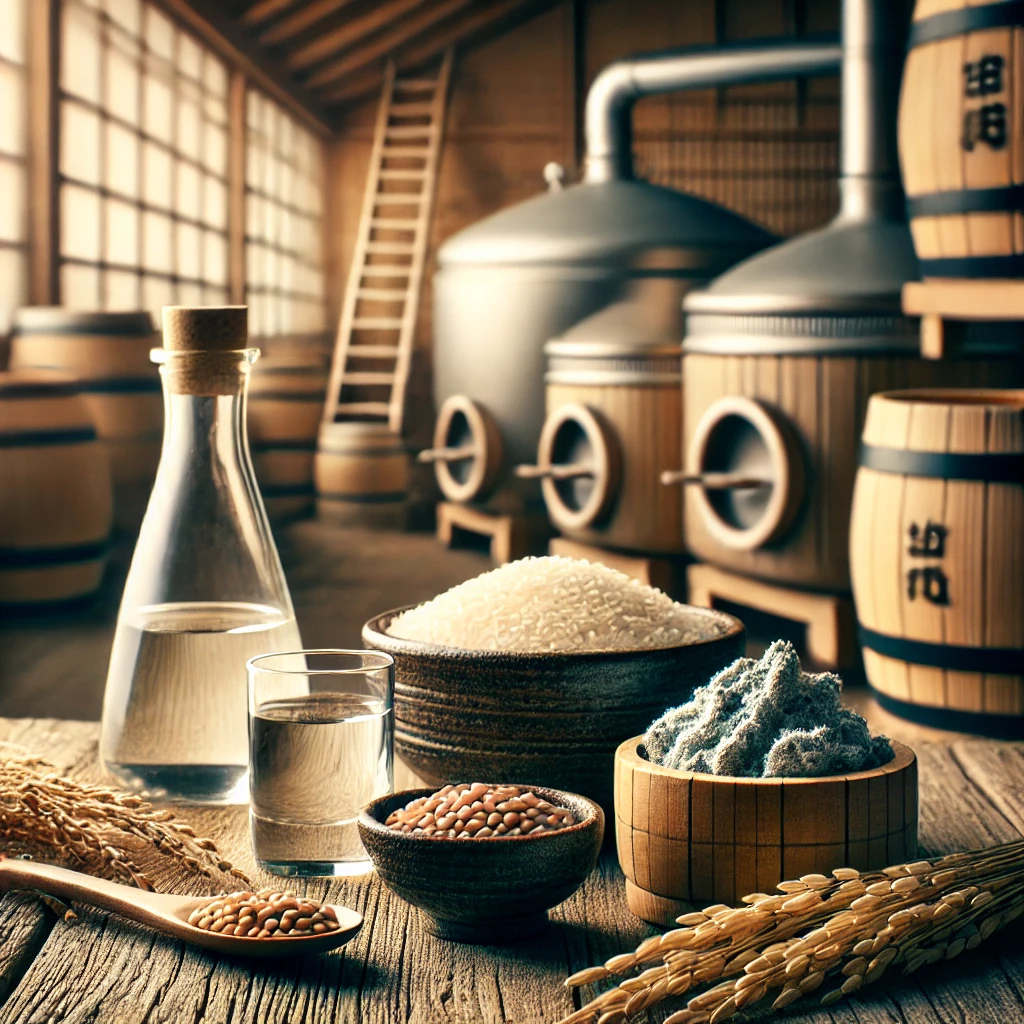
Hello, I’m Mana. I’m currently studying for the Sake Certification Level 3 (Nihonshu Kentei 3-kyu). Sake is a traditional Japanese alcoholic beverage, and its deep culture and long history are truly fascinating—but when you start learning, it can feel a little difficult at first. So this time, I’d like to share the basic knowledge you should keep in mind for the certification, while also helping you feel the charm of sake. In this article, I’ve summarized the key fundamentals I learned, and I’ll explain them in a way that’s easy for beginners to follow without getting stuck.
1. What Is Sake? Definition and Basics
First, let’s make sure we understand what sake is. Sake is an alcoholic beverage made by fermenting rice, rice koji, and water. Legally, it falls under the category called Seishu (清酒, seishu), and this is what people generally call “sake” or “Japanese sake.” One major feature unique to sake is the use of koji mold to convert rice starch into a form that fermentation can use.
The Legal Definition of Sake
Sake (Seishu) is defined under Japan’s Liquor Tax Act (酒税法, shuzei-hou), which specifies the ingredients and production methods. Key points include the following:
- Main ingredients are rice, rice koji, and water.
- Alcohol content must be below 22% ABV.
- Production assumes fermentation using rice koji (koji mold).
Also, depending on the type of Seishu, there are methods that add brewing alcohol (for example, Honjozo-style sake). Whether a sake is made with “only rice, rice koji, and water” is an important checkpoint when you learn how to distinguish different styles.
2. Ingredients of Sake and Their Roles
The main ingredients of sake are rice, rice koji, and water. Each one builds the foundation of flavor, so once you understand their roles, everything becomes much clearer. For certification study as well, this is a must-know section.
1. Rice
For sake brewing, producers sometimes use special rice called Sake-brewing suitable rice (酒造好適米, shuzo-kotekimai), which is different from everyday table rice. This type of rice tends to have larger grains and is more likely to develop a white core called Shinpaku (心白, shinpaku). Shinpaku makes it easier for koji mold to grow into the rice, helping fermentation progress smoothly.
- Famous sake rice varieties include Yamada Nishiki (山田錦, yamada-nishiki) and Gohyakumangoku (五百万石, gohyakumangoku). They can influence aroma and the way umami develops in the final sake.
2. Rice Koji
Rice koji is steamed rice cultivated with koji mold. Here’s the key term to remember: 麹(kouji). 麹(kouji) refers to rice inoculated with koji mold; it breaks down rice starch into sugar, and then yeast turns that sugar into alcohol. In other words, rice koji is like the “engine” that starts sake fermentation.
- Thanks to the work of koji, the base of sweetness and umami is created, which leads to the distinctive flavor of sake.
3. Water
About 80% of sake is water. That’s why brewing water is extremely important. In general, softer water (lower mineral content) tends to create a gentler, smoother taste, while harder water (higher mineral content) can lead to a firmer, more structured taste. This is one of the key factors behind each brewery’s unique character.
3. The Sake Brewing Process
Sake is built on fermentation: rice starch is turned into sugar by koji, and then that sugar is turned into alcohol by yeast. The keyword you should remember here is Parallel Multiple Fermentation. In sake brewing, saccharification (by koji) and alcoholic fermentation (by yeast) happen at the same time. This is considered a rare production style even from a global perspective.
A Simple Overview of the Steps
- Rice polishing (精米, seimai): The outer layer of the rice is milled away so that the brewer can use the inner portion. A lower polishing ratio often reduces components that can cause rough flavors, but the polishing ratio alone does not decide whether a sake is “good” or not. Technique, ingredients, and balance matter.
- Steaming (蒸米, jomai): The polished rice is steamed to create the right condition for koji to work. Steaming quality affects both koji making and fermentation.
- Koji making (米麹, kome-kouji): Koji mold is added to steamed rice to convert starch into sugar. This saccharification step creates the flavor base—sweetness and umami.
- Fermentation (発酵, hakko): Yeast converts sugar made by koji into alcohol. By adjusting temperature and duration, brewers can shape the aroma and flavor direction.
- Pressing (搾り, shibori): The fermented mash (もろみ, moromi) is pressed, and the liquid becomes sake. After that, it can go through filtration, pasteurization, and other steps before shipment.
4. Types of Sake
There are many types of sake, and both the flavor and the best way to drink it can change depending on the style. Here, let’s confirm a few representative examples that are important as the basics.
1. Junmai-shu
Junmai-shu (純米酒, junmai-shu) is sake made only from rice, rice koji, and water. It often shows stronger rice-derived umami and a fuller body. It pairs well with food, and many people enjoy it at different temperatures.
2. Honjozo-shu
Honjozo-shu (本醸造酒, honjozo-shu) is sake made from rice, rice koji, and water, with the addition of a small amount of brewing alcohol (醸造アルコール, jozo-arukoru). This can make aroma lift more easily and the taste feel cleaner or lighter. Alcohol addition is not always just “dilution”—in many cases, it is used to adjust the overall balance, so it’s helpful to understand it as a style.
3. Ginjo-shu and Daiginjo-shu
Ginjo-shu (吟醸酒, ginjo-shu) and Daiginjo-shu (大吟醸酒, daiginjo-shu) are known for delicate brewing methods such as low-temperature, slow fermentation, along with a required polishing ratio. In general, Ginjo-shu is defined as having a polishing ratio of 60% or less, and Daiginjo-shu is 50% or less. They are popular for their fruity, elegant aromas.
5. How to Enjoy Sake
One of the biggest charms of sake is that it can be enjoyed across many temperature ranges. Depending on the temperature, the way you sense aroma, sweetness, acidity, and umami can change—so even the same bottle may feel completely different.
How Temperature Changes the Experience
- Chilled (冷酒, reishu): around 5–10°C. Aromas can feel brighter, and the impression is often crisp and clean.
- Room temperature (常温/ひや, joon / hiya): around 15–20°C. Rice umami and sweetness are easier to notice, and the balance becomes clearer.
- Warm (燗酒, kanzake): around 40–50°C. Aroma may soften and umami can expand, depending on the type. It’s especially popular in colder seasons.
6. Sake and Health (Including Important Notes)
Finally, let’s touch on sake and health. Sake contains components such as amino acids, and in Japan it is often enjoyed together with meals as part of food culture. However, when talking about possible health-related benefits, it’s important to remember that moderation is essential. Drinking too much puts stress on the body, so the basic rule is to enjoy it in a reasonable amount.
Why Sake Is Sometimes Linked to “Beauty”
Sake and sake lees (酒粕, sakekasu) are sometimes talked about in a “beauty” context because they contain amino acids and other components. For example, foods and skincare products using sake lees are popular, and that image is part of the background. Still, how you feel it can vary depending on your body type and lifestyle, so it’s safest to avoid expecting too much and treat it as one enjoyable part of daily life.
Summary
In this article, I organized the basics of sake based on what I learned for the sake certification. Sake is not just an alcoholic beverage—it’s a drink filled with Japanese tradition and culture. Once you understand the fundamentals, reading labels and sensing flavors gradually becomes more fun and meaningful.
By this point, I think the basic way of thinking about sake has become clearer.
Next, let’s look more carefully at “why sake can have such deep, layered flavors.”
We’ll explore the charm created by the simple ingredients of rice and water, with a bit more attention and detail.
▶ Exploring the Charm of Sake: A Superb Cup Created by Rice and Water
コメント