Hello, I’m Mana.
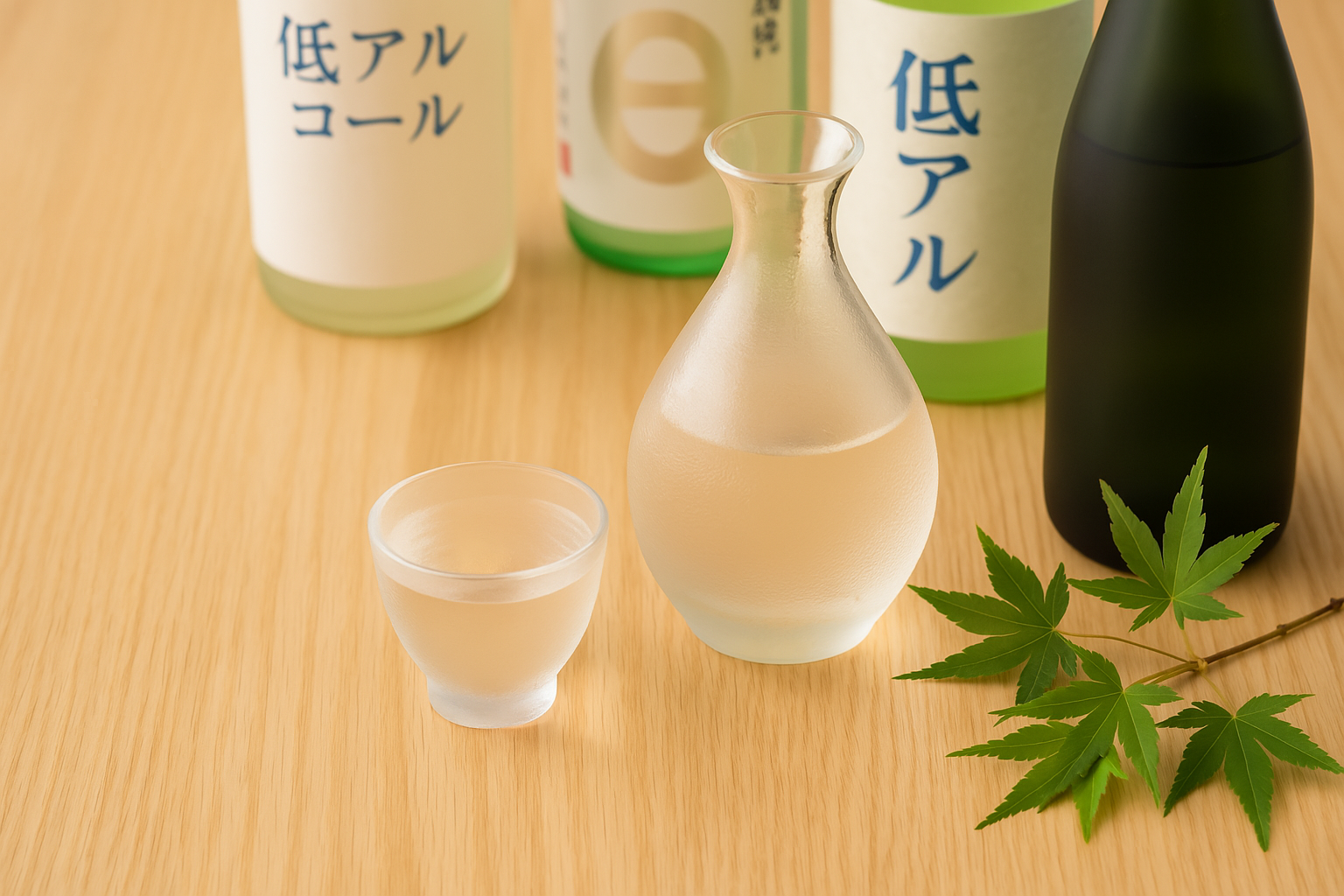
Recently, the term “low-alcohol sake” has been appearing more and more often.
In the past, many people associated sake with a relatively high alcohol content. However, that image is gradually changing.
This time, I’d like to focus on what is often called low-alcohol sake—one of the evolving styles of modern sake. We’ll take a closer look at why it is gaining attention today, what kinds of styles exist, and where you can purchase it.
What Is “Low-Alcohol Sake”?
Low-alcohol sake generally refers to sake with an alcohol content of 13% or lower. Some varieties are even around 5–8%, similar in strength to beer or wine.
Standard sake typically contains around 15–16% alcohol. Therefore, anything below 13% is considered relatively light. Many low-alcohol options are easy to drink with a soft mouthfeel, making them approachable for people who may not have been familiar with sake before.
Why Is Low-Alcohol Sake Gaining Attention?
- Growing health awareness: Many people want to reduce alcohol intake while still enjoying the taste of sake.
- Appeal to younger generations and women: Sweet-and-tart fruity profiles, small bottle sizes, and modern design elements are especially popular.
- Casual drinking occasions: Ideal for picnics, home parties, aperitifs, or after-dinner drinks.
It’s clear that sake continues to evolve flexibly in response to changing times and lifestyles.
Main Types of Low-Alcohol Sake
There are several styles within the low-alcohol sake category. Let’s take a look at some representative types.
① Sparkling Sake
Containing carbonation, this style offers a refreshing, champagne-like sensation.
“Mio Sparkling” (around 5%) and “Suzune” (4.5–5.5%) are popular for their elegant appearance and light taste.
② Fruity and Sweet Styles
These feature fruit-like aromas and gentle sweetness.
“Himezen” (around 8%) and “Fukunishiki Fu Junmai” are approachable labels for beginners.
③ Low-Alcohol Junmai and Ginjo Types
Based on traditional brewing methods but with reduced alcohol levels.
Examples include “Kamokinshu Tokubetsu Junmai 13” and “Matsumori Rendezvous in the Afternoon.”
④ Nigori (Cloudy) Style
Characterized by its cloudy white appearance and creamy texture. “Sanuki Claudy” (around 6%) is known for its light, smooth drinking experience.
How Is Low-Alcohol Sake Made?
Low-alcohol sake is not simply diluted with water. Various techniques are carefully combined.
- Water adjustment (dilution): Adding water after fermentation to adjust alcohol content.
- Fermentation control: Stopping fermentation early to limit alcohol production.
- Yeast selection: Using yeast strains that naturally produce lower alcohol levels.
- Yondan-shikomi (four-stage brewing): An additional step to enhance sweetness and umami.
For example, the “Afuri” series by Kikkawa Jozo in Kanagawa Prefecture has attracted attention for its “unpolished sake” concept, using rice polished only to 90%.
Where Can You Buy It?
Low-alcohol sake is available not only in physical stores but also through online retailers.
- SAKEguru
https://www.sakeguru.com/ - IMADEYA Online Store
https://imadeya.co.jp/ - Rakuten, Amazon, Yahoo! Shopping
- KURAND
https://kurand.jp/ - Direct from Breweries
Izumibashi Shuzo: https://www.izumibashi.com/
Fukunishiki: https://www.fukunishiki.co.jp/
Some labels are seasonal releases, so it’s best to check availability directly with each retailer.
Sake’s Evolution Goes Beyond Low Alcohol
- Non-alcoholic sake (e.g., Gekkeikan Special Free)
- Flavored sake
- Sake tourism (brewery tours and experiential events)
Conclusion
Low-alcohol sake represents a modern evolution of traditional Japanese brewing. With its drinkability and diversity, it offers a new entry point into the world of sake.
Why not pick up a bottle that catches your interest and explore the world of sake at your own pace?
Sake changes not only in alcohol level but also with the seasons—fresh spring brews, refreshing summer styles, autumn’s “hiyaoroshi,” and warming winter sake. Once you understand the seasons, choosing sake becomes even more enjoyable.

コメント