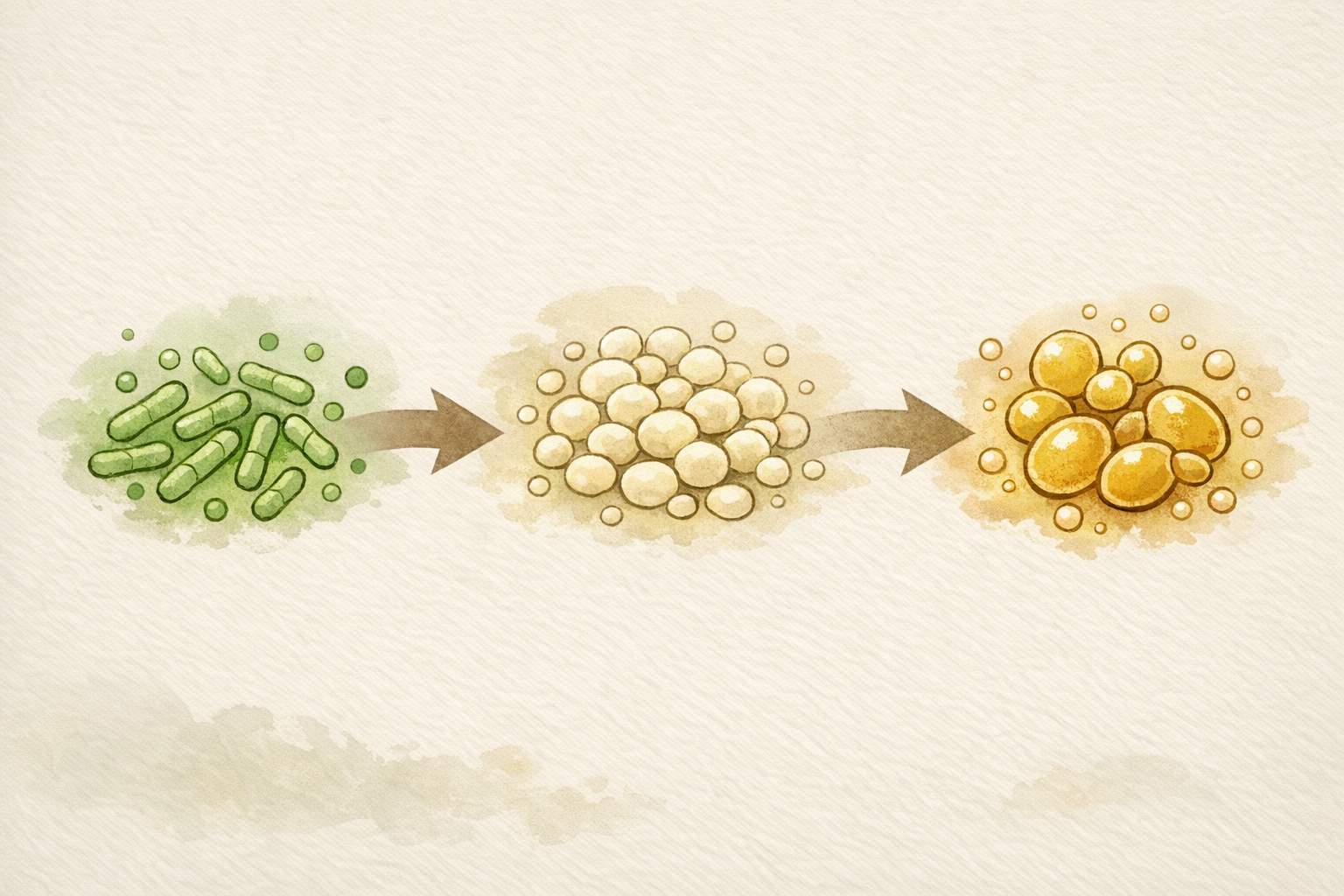
When studying the sake brewing process, the yeast starter, shubo, is positioned as an indispensable step. Historically and technically, it has indeed been a crucial system supporting quality.
However, it is worth pausing for a moment to reconsider.
Given modern brewing technology, is the yeast starter truly an absolute requirement? In reality, there are brewing designs that simplify the starter, and even methods that come close to omitting it altogether.
In this article, we will trace the development from kimoto to sokujo, and finally to starter-simplified brewing, from the perspective of the evolution of microbial control technology.
- Before the Yeast Starter — The Uncertainty of Fermentation
- Kimoto — A Design Philosophy of Microbial Transition
- Yamahai — Rationalization While Preserving Philosophy
- Sokujo — A Turning Point Toward Scientific Control
- The Modern Era — The Yeast Starter as a Variable Parameter
- Omission Is Not Regression
- Conclusion — The Yeast Starter as a Choice of Philosophy
Before the Yeast Starter — The Uncertainty of Fermentation
Before the yeast starter was established, sake brewing relied on spontaneous fermentation.
Microorganisms present in the air and raw materials participated randomly. Not only yeast but also unwanted bacteria proliferated simultaneously. Whether fermentation succeeded depended heavily on environmental conditions, and the boundary between successful fermentation and spoilage was extremely unclear.
What becomes evident here is the necessity of environmental control to allow yeast to dominate.
The yeast starter was not merely an added step. It was a technology that transformed fermentation from chance into a reproducible phenomenon.
Kimoto — A Design Philosophy of Microbial Transition
Established during the Edo period, kimoto represents a systematized model of microbial control built from accumulated empirical knowledge.
In this process, nitrate-reducing bacteria first proliferate and produce nitrite. Next, lactic acid bacteria become dominant, acidifying the environment through lactic acid production. As a result, acid-tolerant yeast selectively multiplies.
This is not simple natural occurrence. It is a designed microbial transition that utilizes the passage of time.
The yeast starter functions both as a yeast cultivation stage and as a process that applies selective pressure to eliminate unwanted microbes.
Here, we can observe the scientific rationality embedded in sake brewing.
Yamahai — Rationalization While Preserving Philosophy
Yamahai is an abbreviation of yamaoroshi haishi moto, meaning “yeast starter without the yamaoroshi step.”
The labor-intensive rice-mashing process was eliminated, reducing physical effort.
However, the fundamental structure—natural proliferation of lactic acid bacteria—remains intact. Yamahai preserved the conceptual framework while rationalizing the process. It can be understood as an improved version that inherited kimoto’s microbial control model while reducing manual labor.
The primary objective here was not flavor change, but operational efficiency.
Sokujo — A Turning Point Toward Scientific Control
Developed in the Meiji era, sokujo is characterized by the addition of purified lactic acid.
Rather than waiting for lactic acid bacteria to grow naturally, acidity is established at the initial stage. This dramatically reduces contamination risk. The significance of this innovation lies in the leap in reproducibility.
Under mass production systems, stable supply and uniform quality became essential. Sokujo marked a clear transition from natural regulation to scientific management.
At this stage, the yeast starter evolved from a technology that coexisted with nature to one that deliberately engineered the environment.
The Modern Era — The Yeast Starter as a Variable Parameter
Today, pure cultured yeast strains are established, and sanitation and temperature control systems are highly advanced. As a result, fermentation can be directly designed without prolonged yeast starter cultivation.
Examples include:
- High-temperature saccharification starters
- Direct yeast addition methods
- Low-alcohol design
- Short-term brewing for sparkling sake
In particular, for light and low-alcohol styles, speed and cleanliness are often prioritized over complex microbial transitions. The yeast starter is no longer a fixed step, but one selectable design parameter depending on the intended outcome.
Omission Is Not Regression
Simplifying the yeast starter may sometimes be perceived as rejecting tradition. However, from the perspective of technological evolution, it represents a form of optimization.
Advantages include:
- Shorter brewing periods
- Reduced costs
- Adaptability to small-batch, multi-product production
- Faster response to market demand
At the same time, there are trade-offs:
- Reduced microbial complexity
- Potential loss of depth in flavor
For this reason, the recent re-evaluation of kimoto-style brewing is understandable. Complexity itself is being reassessed as a form of value.
Conclusion — The Yeast Starter as a Choice of Philosophy
Kimoto represents a philosophy that respects time and nature. Yamahai represents a philosophy of rationalization. Sokujo represents a philosophy of scientific management. Starter omission represents a philosophy of purpose optimization.
The yeast starter is not merely a step in production. It reflects what each era chose to prioritize.
Choosing a sake may also mean choosing which philosophy resonates most with you.
Within a single cup of sake lies the layered history of microbial control technology and shifting values. Understanding this may reveal new contours in its flavor.
We have examined the yeast starter from the perspective of the evolution of microbial control technology.
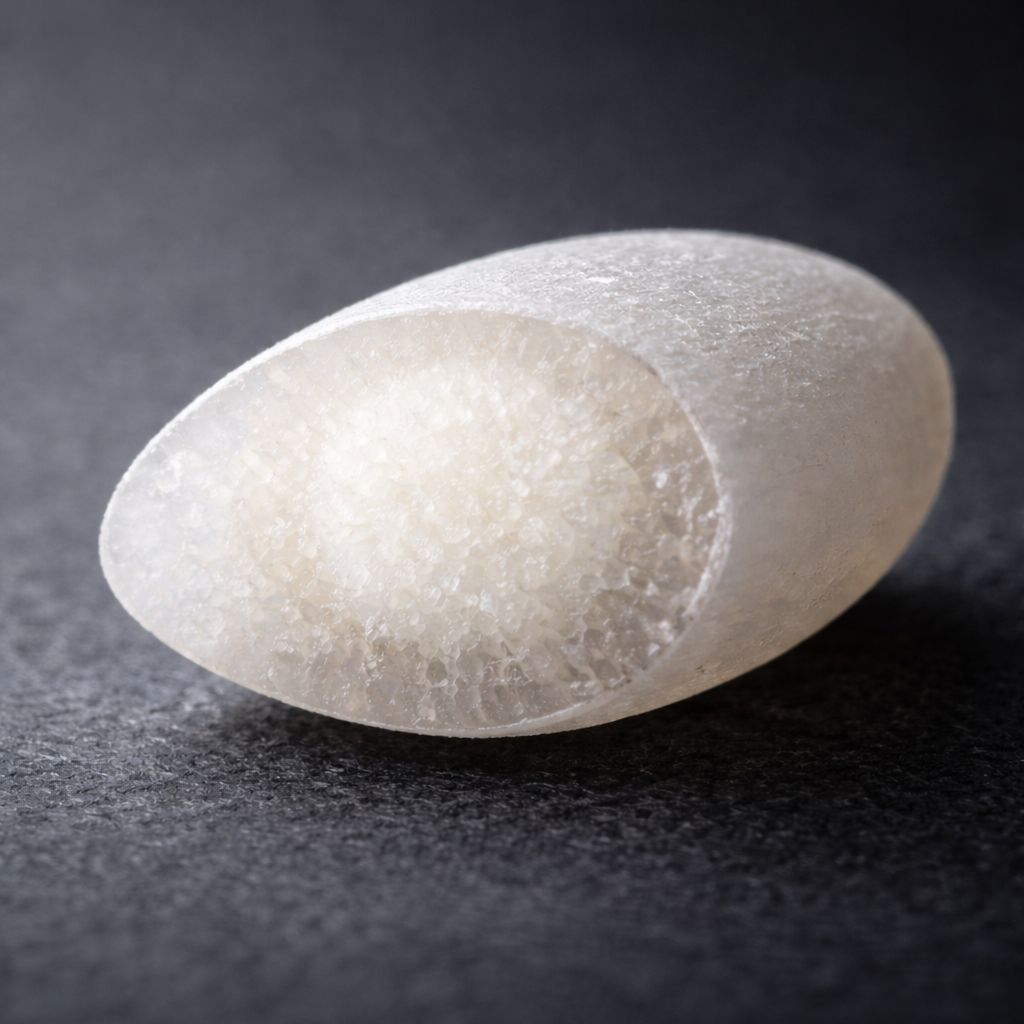
Next, we turn to the foundation of fermentation design itself: rice. What structural characteristics make rice suitable for sake brewing?
In the next article, we will explore: What Is Sake Rice? — The Science of Shinpaku and Brewing Suitability.
Comment