mana

Sponsored
Ingredients

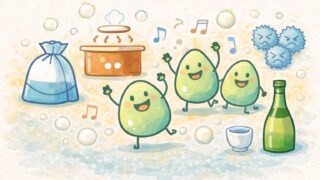
What Is Shubo? A Simple Guide to Its Role and Importance in Sake Brewing

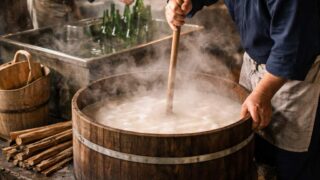
Discover the essentials of "Shubo" (yeast starter) in sake brewing. This guide explains why yeast is cultivated first, how lactic acid creates a protective acidic environment to inhibit bacteria, and how it ensures stable fermentation. Perfect for beginners and those preparing for sake certification exams.
History & Regions

Comparing Nada and Niigata: Understanding Regional Differences in Sake Through Water, Climate, and History

This article compares sake from Nada and Niigata from the perspectives of water quality, climate, history, and flavor. It explains the contrast between the hard “Miyamizu” water of Nada and the soft snowmelt water of Niigata, as well as the background behind rich, full-bodied styles and the refined “tanrei karakuchi” profile.
History & Regions

Tracing the History of Sake Through Historical Records — From Ancient Origins to the Modern Era

This article explores the history of sake through historical sources such as Kojiki and Engishiki. From mythological references and temple brewing traditions to the distribution revolution of the Edo period and the scientific modernization of the Meiji era, it traces how sake evolved across the centuries.
Serving & Storage

Should Sake Be Refrigerated or Stored at Room Temperature? The Science Behind Deterioration — Effects of Temperature, Light, and Oxygen

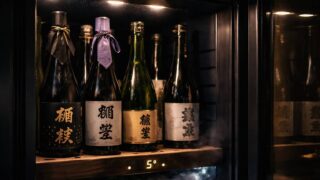
The way you store sake directly affects its flavor. This guide clearly explains the differences between refrigeration and room-temperature storage, as well as the mechanisms of deterioration caused by light and oxygen. It also outlines storage differences between unpasteurized (namazake) and pasteurized sake, along with recommended time frames after opening.
Serving & Storage

Mastering Sake Temperature Ranges: How Flavor Changes at 35°C, 40°C, 45°C, 50°C, and 55°C

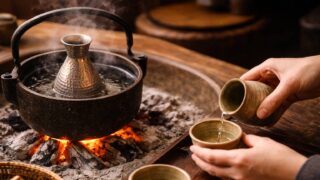
Sake changes dramatically with temperature. From 35°C (hitohadakan, body-temperature warm) to 55°C (tobikirikan, very hot), this guide clearly explains the characteristics and flavor differences at each range. It also introduces practical home-heating methods and tips to avoid common mistakes.
Types & Labels

Understanding the Differences Between Genshu, Namazake, and Namachozo — Mastering the Basics of Sake Through Pasteurization and Dilution

Understand the differences between Genshu, Namazake, and Namachozo. By categorizing them through two key factors—the number of pasteurizations and whether water is added—you can easily decode sake labels. This guide covers everything from flavor profiles to proper storage tips.
Types & Labels

Does the Rice Polishing Ratio Really Not Matter for Junmai Sake? — Understanding This “Flexible Category” Through Regulations and Flavor Design

Junmai sake is often said to have no rice polishing ratio requirement—but does that mean polishing doesn’t matter? This article clarifies the regulatory framework and the practical realities of flavor design, offering a clear explanation of the relationship between Junmai and rice polishing.
Types & Labels

Understanding the Eight Categories of Tokutei Meishoshu Through Two Key Axes

This guide organizes the eight official categories of Tokutei Meishoshu using two essential axes: alcohol addition and rice polishing ratio. Instead of memorization, you’ll understand the structural differences between Junmai, Ginjo, Daiginjo, and Honjozo.
Ingredients

What Are the Differences Between Kyokai No. 701, 901, and 1801? — Understanding Their Unique Profiles Through Aroma, Acidity, and Sake Style

What are the differences between Kyokai No. 701, 901, and 1801 yeast strains? This practical guide explains their unique characteristics based on key aroma compounds such as ethyl caproate and isoamyl acetate, as well as acidity trends and resulting sake styles. It also clarifies their relationship with ginjo-style sake.
Ingredients

What Is Kyokai Yeast? — The Role of Yeast in Shaping Sake Aroma and the Differences Between No. 701 and No. 1801

What is Kyokai yeast? This beginner-friendly guide explains the role of yeast in sake brewing, including foamless strains such as No. 701 and No. 901, the characteristics of No. 1801, and their relationship to ginjo aroma. A practical foundation for serious sake learners.
Sponsored