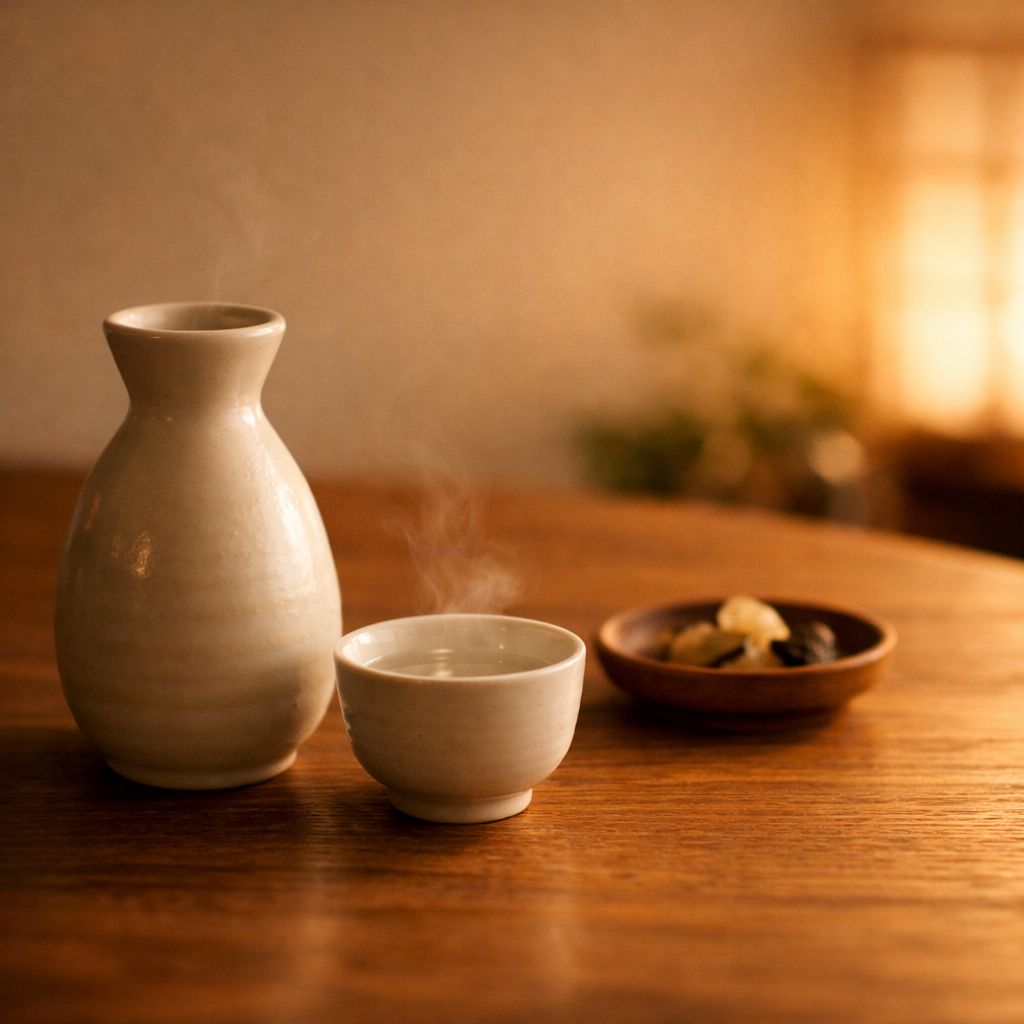
Good evening, I’m Mana.
Today, I’m sharing a gentle beginner’s guide for anyone who thinks, “I’d like to enjoy sake at home, but I don’t know where to start.”
That flavor and aroma you thought you could only enjoy at restaurants—you can absolutely enjoy them at home, too.
Just learning a few small tips and a bit of basic knowledge can make the experience feel much deeper and more satisfying.
1. Let’s Learn a Tiny Bit About Sake Types
Even though we say “sake” in one word, there are actually many different types.
Before getting overwhelmed by complicated classifications, it helps to simply know, “Oh, there are a few key differences.” That alone becomes a great guide when you’re choosing a bottle.
● Junmai-shu: A Cup Packed with Rice Umami
Made with only rice, water, and rice koji.
It often has a rich, rounded rice flavor with a gentle touch of acidity.
It pairs well with more boldly seasoned Japanese dishes, and it’s also delicious warmed—an all-around dependable choice.
● Ginjo-shu: Fruity and Light
This sake is made by polishing the rice carefully and fermenting slowly at a low temperature.
Its aroma is elegant and expressive—some people even find it wine-like.
Chilling it is perfect when you want to enjoy a clean, transparent taste.
● Honjozo-shu: Crisp, Easygoing, Great for Everyday Meals
By adding a small amount of brewing alcohol (醸造アルコール, jozo-arukoru), the flavor becomes clean and smooth.
It’s easy to drink, with very little “quirkiness,” and it won’t overpower your food—this is one of its biggest charms.
Even just remembering these three makes label-picking much easier at the store.
Try small amounts of different styles and see if you can discover what you personally love.
2. Flavor Changes with Temperature: Sake Is Fun That Way
You may have heard that wine is served at different temperatures depending on whether it’s red or white.
Actually, sake also changes surprisingly a lot depending on temperature.
The same bottle can feel refreshing when chilled, and more umami-rich when warmed.
Being able to enjoy those changes is one of the biggest charms of sake.
● Reishu (Chilled): Clean and Fresh
Sake chilled in the refrigerator tastes clear and crisp.
Especially with Ginjo-shu and Daiginjo-shu, chilling makes the aroma stand out beautifully.
Helpful temperature guide
・Yukibie (雪冷え, yukibie): about 5°C
・Hanabie (花冷え, hanabie): about 10°C
・Suzubie (涼冷え, suzubie): about 15°C
● Room Temperature: Feel the Sake’s Natural Character
Around 15–20°C—basically normal indoor temperature.
You can enjoy fuller-flavored styles like Junmai-shu and Honjozo-shu in a well-balanced way.
This range is great because the balance of aroma and taste feels natural and easy to understand.
● Kanzake (Warmed): Soft, Round, and Comforting
This is the style of warming sake, usually anywhere from about 30°C to 55°C.
Junmai-shu and Honjozo-shu can become especially expressive when warmed, bringing out rice sweetness and umami.
Traditional temperature names
・Hitohadakan (人肌燗, hitohada-kan): about 35°C
・Nurukan (ぬる燗, nuru-kan): about 40°C
・Jokan (上燗, jo-kan): about 45°C
・Atsukan (熱燗, atsu-kan): about 50°C
・Tobikirikan (飛び切り燗, tobikiri-kan): about 55°C
Warming slowly in a hot-water bath is best.
Rather than using a microwave, I recommend placing a tokkuri (徳利, tokkuri) in warm water.
Being able to choose your temperature based on your mood—like, “It’s cold today, maybe I’ll go with nurukan”—is one of the joys of enjoying sake at home.
3. Does Changing the Cup Change the Taste?
Let’s also pay a little attention to the vessels you pour sake into.
Depending on the shape and material, the aroma can spread differently, and the temperature can be held in a different way.
● Ochoko: A Small, Formal Sake Cup
Perfect for sipping slowly in small amounts.
Its small size is also great for hot sake because you can finish it before it cools down.
● Guinomi: Casual, with More Aroma
Slightly larger than an ochoko, with a wider opening.
Recommended when you want to enjoy aroma, or when you want a more generous sip.
● Wine Glass: Perfect for Ginjo Styles
This may surprise you, but aromatic Ginjo-shu and Daiginjo-shu are wonderful in a wine glass.
The aroma rises beautifully, and you can feel the depth of flavor more clearly.
● Enjoy the Differences in Materials Too
The material of the cup can subtly change mouthfeel and the way aromas open up.
When you find a favorite cup, your sake time can feel even more special.
- Ceramic: Thick, gentle, and comfortable in the hand. Because temperature changes slowly, it’s great for warmed sake. It can also make the taste feel rounder.
- Glass: Cool, clean, and visually refreshing—ideal for chilled sake. You can enjoy the color and clarity with your eyes, too. Perfect for hot seasons.
- Wood (Masu): The subtle aroma of wood like hinoki cypress can transfer lightly into the sake, creating a very Japanese atmosphere. It tends to match calmer styles like Junmai-shu rather than highly aromatic sake.
- Lacquerware: Smooth on the lips with a refined, elegant feel. Light and easy to handle, it pairs well with room-temperature sake or gently warmed sake. Great for celebrations or special evenings.
- Tin: A material traditionally said to “make sake taste mellower.” It conducts heat well—chilled sake feels extra sharp, and warmed sake keeps a gentle warmth. The unique shine is also beautiful.
Feeling the differences in texture and mouthfeel across materials is also part of the fun.
Choosing a cup to match your mood or the season becomes a soothing moment in itself.
Once you can enjoy sake at home, let’s take one small step further.
In fact, sake can change dramatically depending on temperature and vessels.
Even the same bottle can show a completely different expression.
▶ “Make Sake Even More Delicious!” How to Choose Temperature and Sake Ware

コメント