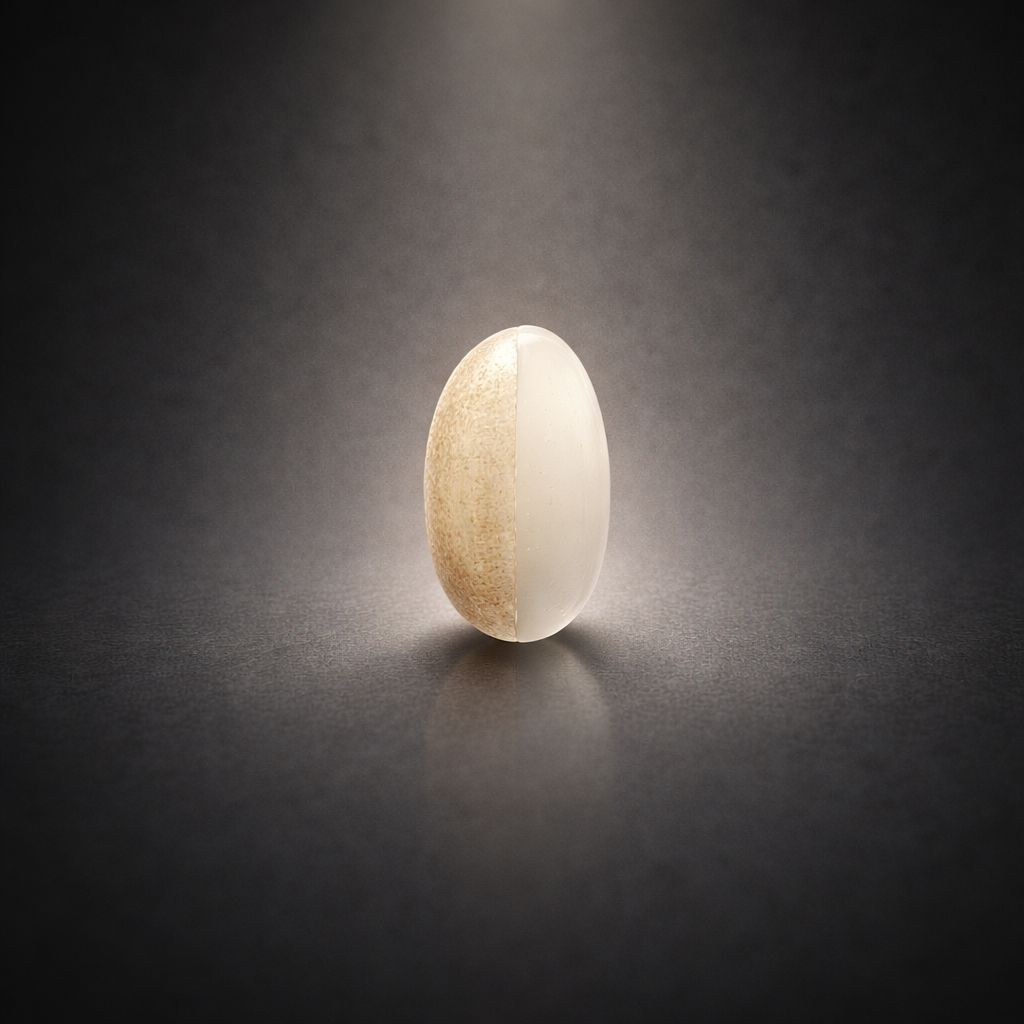
“I heard that Junmai sake has no rice-polishing requirement.”
When you study sake, you may come across this idea. And then a few questions naturally appear.
- Wait—so can any percentage be called Junmai?
- Does that mean you don’t have to polish the rice?
- So does the polishing ratio not matter after all?
Here is the conclusion first: under the current system, there is no minimum requirement. However, that does not mean the polishing ratio “doesn’t matter.”
In this article, we will organize the relationship between Junmai sake and the polishing ratio by looking at both sides: the institutional background and the reality of brewing.
- First, Confirm: What Is Junmai Sake?
- Conclusion 1: Under Today’s Rules, There Is No Minimum Polishing Requirement
- So, Does the Polishing Ratio Not Matter?
- How the Polishing Ratio Affects Taste
- Why Junmai Is a “Flexible Category”
- What About the Real Market?
- Clearing Up Common Misunderstandings
- It’s Important to Separate “Rules” from “Taste”
- Summary: Junmai Polishing Ratio Is Not “Irrelevant”—It’s “Free”
First, Confirm: What Is Junmai Sake?
純米酒(じゅんまいしゅ / junmai-shu) is sake made only from rice, rice koji, and water. The most important condition is that no 醸造アルコール(じょうぞうあるこーる / jōzō arukōru) – brewing alcohol – is added.
As explained in the previous article, 特定名称酒(とくていめいしょうしゅ / tokutei meishō-shu) can be organized with two axes: (1) whether alcohol is added, and (2) the rice polishing ratio. Junmai is the category on the “no-addition side.”
The key point here is that the definition of Junmai is about ingredients, and it does not directly set the polishing ratio as a condition.
Conclusion 1: Under Today’s Rules, There Is No Minimum Polishing Requirement
Under the current system, Junmai sake has no minimum polishing ratio requirement. In theory, this means a brewery could label a sake as Junmai even at 80% or 85%.
That said, the history helps explain why.
In the past, Junmai sake did have a condition such as “polishing ratio of 70% or less.” But that restriction was removed through rule changes. Behind that shift were trends such as:
- Greater diversity in brewery styles
- A re-evaluation of low-polish sake
- Moving away from uniform standards
In other words, as a system, the direction became “do not restrict Junmai by how much the rice is polished.”
So, Does the Polishing Ratio Not Matter?
This is the main point.
Not being a classification condition does not mean it has no effect.
The polishing ratio is an extremely important parameter in flavor design. In fact, you could say that Junmai is a category where the brewery’s design philosophy for polishing shows up especially clearly.
How the Polishing Ratio Affects Taste
Let’s recall the structure of rice.
- Outer layers: rich in proteins, lipids, and minerals
- Core: rich in starch (including 心白(しんぱく / shinpaku) – shinpaku, an opaque starchy core in sake rice)
Outer components can become sources of amino acids and rough-taste elements during fermentation, while the inner core supports cleaner alcoholic fermentation.
So what happens when you polish the rice?
- Potential roughness decreases
- Aroma tends to become clearer
- Fermentation tends to become more stable
On the other hand, if you intentionally choose not to polish as much:
- Umami can become richer
- More body and depth can appear
- Stronger individuality can emerge
So the polishing ratio is not about “better or worse.” It is a factor that determines the direction of the sake.
Why Junmai Is a “Flexible Category”
Because Junmai has no polishing restriction, it is a category with high design freedom.
For example:
- Junmai at 60%
- Junmai at 70%
- Low-polish Junmai at 80%
All of these are Junmai. But the taste can be very different.
In recent years, more brewers have intentionally used lower polishing ratios to bring out rice character. This kind of expression has expanded precisely because the system allows freedom.
What About the Real Market?
In theory, any percentage is possible. In reality, however, many Junmai sakes cluster in the 60–70% range.
Why?
- It is easier to balance the flavor
- The cost trade-off works well
- It matches consumer expectations more easily
There are Junmai sakes in the 50% range, and also low-polish Junmai above 80%. But the mainstream sits in the middle.
In other words, the market chooses a “practical optimum” within the freedom allowed by the system.
Clearing Up Common Misunderstandings
Misunderstanding 1: Junmai must be 70% or less
→ Under current rules, that requirement does not exist.
Misunderstanding 2: High-polish-ratio Junmai is low quality
→ Not necessarily. It is a difference in flavor design.
Misunderstanding 3: Polishing ratio matters only for ginjō types
→ It is an important design element even for Junmai.
It’s Important to Separate “Rules” from “Taste”
Confusion around Junmai happens because people mix up “the system’s conditions” and “taste tendencies.”
- Rules: no added alcohol
- Flavor design: the polishing ratio plays a major role
When you separate these two, everything becomes much clearer.
Summary: Junmai Polishing Ratio Is Not “Irrelevant”—It’s “Free”
- Under today’s system, Junmai has no minimum polishing requirement
- But the polishing ratio strongly influences flavor design
- Junmai is a category with high freedom in polishing choices
- That is why the range of styles is so wide
When choosing Junmai, don’t look only at the word “Junmai.” Try also paying attention to the polishing ratio number—you may discover something new.
Next Read: The Differences Between Genshu, Namazake, and Namachozō-shu
Once you have organized the relationship between Junmai and polishing ratio, the next labels you may wonder about are “Genshu,” “Namazake,” and “Namachozō-shu.”
These are classifications on a different axis from tokutei meishō-shu. They relate to whether water is added and how many times 火入れ(ひいれ / hiire) – pasteurization – is performed. The names look similar, but the meanings are completely different.
When you understand the system differences as a structure, label reading becomes even more three-dimensional.
▶ Understand the Differences Between Genshu, Namazake, and Namachozō-shu as a Structure
After polishing ratio, the next design axis is pasteurization and dilution. Let’s read sake labels one level deeper.
コメント