Hello, I’m Mana.
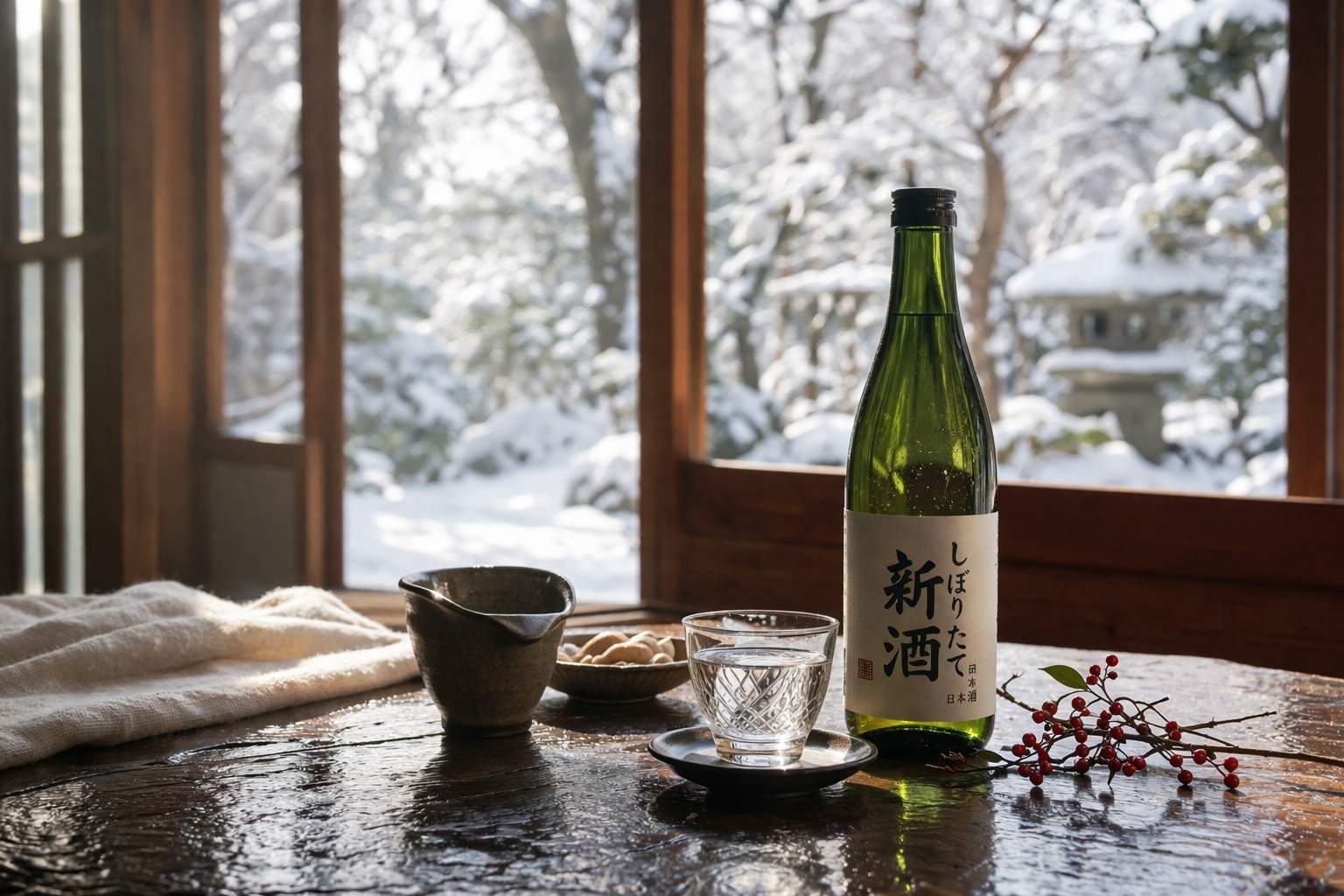
In winter sake sections, you sometimes see bottles labeled “hatsushibori.” They are often displayed alongside shinsyu, and many people may have felt that the difference between them is not so easy to understand.
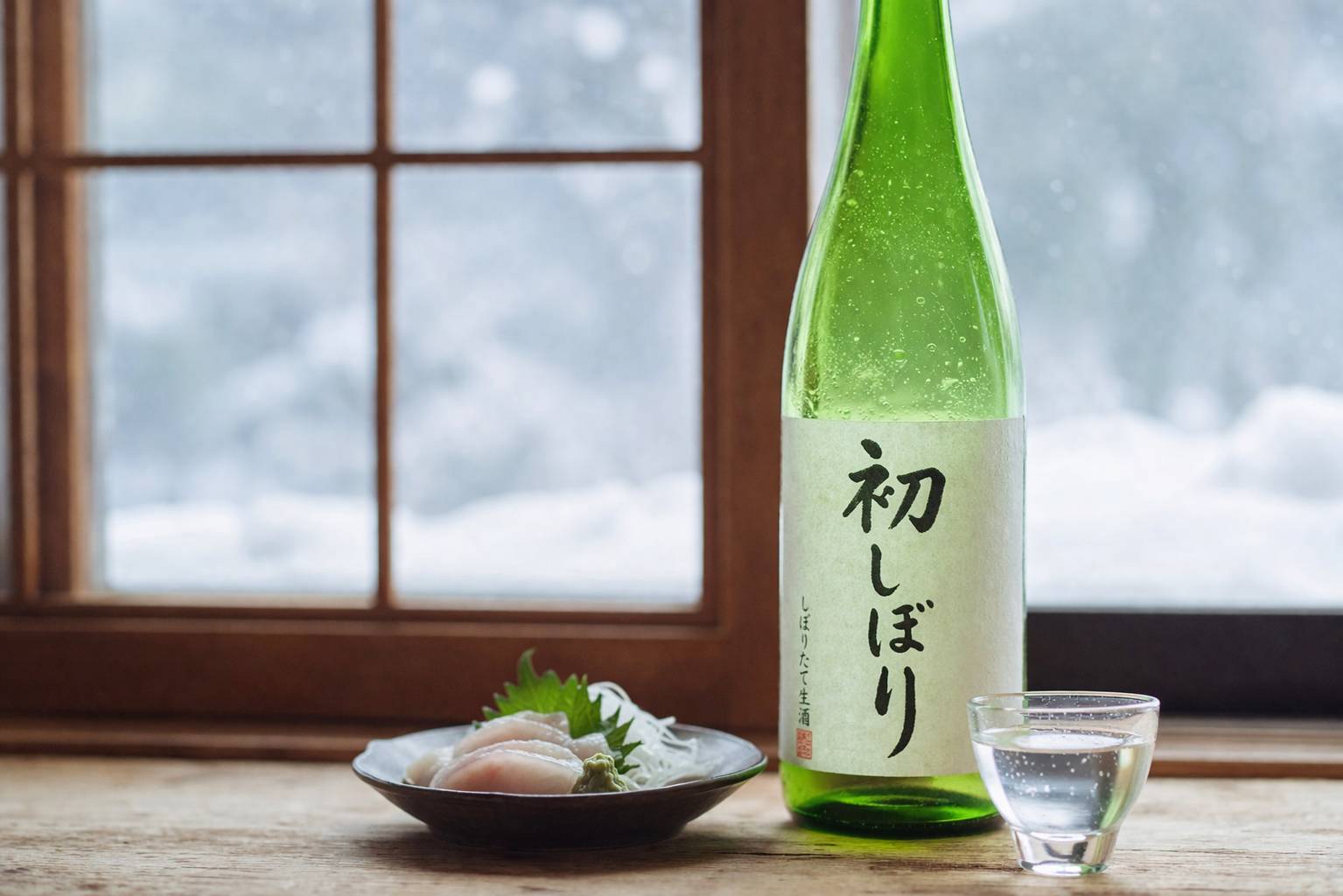
Hatsushibori is not simply freshly made sake. It refers to a sake that carries the meaning of the first bottle pressed in that brewing year. For a brewery, it also marks the beginning of the season, and for the drinker, it has a special feeling as “the first glass of the season.”
In this article, I will explain what hatsushibori is, how it differs from shinsyu, and what kind of flavor characteristics it has.
What Is Hatsushibori?
Hatsushibori is a term that refers to the first sake pressed in that brewing year.
Sake takes its final form when the fermented moromi (醪, the main fermenting mash) is pressed. This pressing step is called jousou (上槽, pressing), and hatsushibori can be understood as the sake born from the first jousou of the season.
For that reason, hatsushibori naturally overlaps with the meaning of “the beginning of that year’s sake brewing.” It is not just a new sake. It is also something that makes it easy to feel a turning point, both for the brewery and for the person drinking it.
What Does “First Pressing” Mean?
One thing that may make you curious here is the meaning of the phrase “first pressing.”
Sake is completed by pressing moromi after fermentation has finished, but this process is not done all at once in a single moment. In reality, it is pressed gradually over time while pressure is applied little by little.
Because of that, hatsushibori does not mean only the very first liquid that comes out. In general, hatsushibori refers to the entire first sake pressed in that brewing year, rather than only one part of the tank.
Even within a single pressing, different parts appear, such as arabashiri (荒走り, the free-run first flow), the well-balanced nakadori (中取り, the middle portion), and seme (責め, the final part pressed out under stronger pressure). However, hatsushibori is easier to understand as a word that expresses the timing of “the first pressing of the year,” separate from these more detailed classifications.
Differences in pressing style like these are also one of the elements that create the wide range of sake flavors.
How Is It Different from Shinsyu?
A similar term to hatsushibori is “shinsyu.”
The two are quite close, but they do not mean exactly the same thing.
Shinsyu is a broad term for sake that has just been made in that year. By contrast, hatsushibori is often used to emphasize that it was the first sake pressed in that brewing year.
In other words, if shinsyu is a wide term that refers to freshly made sake as a whole, then hatsushibori can be seen as a slightly more special kind of sake because the meaning lies in it being “the first bottle.”
I also explain shinsyu in more detail in the article about shinsyu.
Why Does Hatsushibori Feel Special?
Hatsushibori feels special for more than the simple reason that it is fresh.
For a brewery, hatsushibori is the first bottle of that year’s brewing season that actually takes shape and goes out into the world. In a way, it is the first visible result of the season. For the toji (杜氏, master brewer) and the kurabito (蔵人, brewery workers), it is probably recognized as a meaningful sake that marks an important moment, with a sense of tension as well.
From the drinker’s point of view as well, hatsushibori has the easy-to-understand special feeling of being “the first of this season.” Shinsyu also has the charm of a seasonal limited release, but hatsushibori carries an added sense of beginning and the fun of being first.
Flavor Characteristics of Hatsushibori
Hatsushibori is a sake in which it is easy to feel the youthful quality that only freshly pressed sake has.
- Fresh and lively
- Aromas rise easily
- Sometimes slightly rough or youthful
- May retain a light fizzy sensation
Of course, the flavor differs depending on the brewery and label. Still, rather than thinking of it as something calm and settled like aged sake, it is easier to understand it as a type of sake enjoyed for “the youth of something just made” and “the lightness that feels true to freshly pressed sake.”
I think this slightly not-yet-fully-settled feeling is also one of the charms that is very typical of hatsushibori.
When Does Hatsushibori Appear?
Hatsushibori is most commonly seen around November to December.
Shinsyu as a whole appears from winter to early spring, but hatsushibori shows up especially early within that season. The exact timing varies from brewery to brewery, but because of its nature as “the first of the year,” it is often positioned in the earlier part of the season.
Because of that, when you see hatsushibori in a shop, it can also become a moment that makes you feel, “the new sake season has started again this year.”
How Is It Different from Risshun Asashibori?
Risshun Asashibori is also a term that feels special in the same way as hatsushibori, but its meaning is a little different.
For hatsushibori, the point is that it is the first sake pressed in that brewing year. By contrast, Risshun Asashibori is a sake whose meaning lies in its date and seasonal event character: it is pressed on the morning of Risshun and shipped out on that same day.
Both have the charm of freshly pressed sake, but the difference is easier to understand if you think of hatsushibori as the start of the brewing season, while Risshun Asashibori is an auspicious sake celebrating the beginning of spring.
Its Relationship with Nigorizake
During the hatsushibori season, you may also see nigorizake.
Nigorizake is a sake finished by roughly straining moromi, so it is a style that can be shipped relatively soon after pressing. Because of that, in the early winter season, nigorizake may sometimes appear as hatsushibori.
Of course, hatsushibori does not mean the same thing as nigorizake. Still, both go well with the image of the freshness of just-pressed sake, so they are often displayed with a similar seasonal atmosphere in shops. I also talk about nigorizake in more detail in the article about nigorizake.
How to Enjoy Hatsushibori
Hatsushibori is easiest to understand when chilled, because its freshly pressed aroma and youthful character come through clearly that way. It also pairs well with lighter dishes such as sashimi, white fish, and chilled tofu, and if you enjoy it sooner rather than later as a bottle that belongs especially to this moment, it becomes even easier to feel its seasonal character.
Also, in winter, many breweries release hatsushibori as the first pressing of that year. It is especially common in Niigata and the Tohoku region, where it is loved as a winter classic. In addition, from winter to spring, some breweries hold open-house events or new sake tasting events, and these can offer a chance to taste hatsushibori on the spot.
If hatsushibori makes you want to learn more broadly about winter sake, it is also interesting to compare it with shinsyu and nigorizake.
Summary
Hatsushibori is the first sake pressed in that brewing year. It appears especially early among new-season sake, and lets you enjoy the youth and freshness that only just-pressed sake can have.
If shinsyu is a broad term for freshly made sake, then hatsushibori is a sake with the added special feeling of being “the first bottle.” Its unique charm lies in the way it lets you drink while sensing the beginning of the brewery’s new season.
If you see it in winter sake sections, I hope you will pick it up with the feeling of enjoying “the first glass of the season.” And if you also read about shinsyu, Risshun Asashibori, and nigorizake, your view of winter sake will expand even more.